Retrieval-Augmented Generation: The Architecture Powering Enterprise AI
Category
AI & Machine Learning
Explore more in this category
RAG has become the default pattern for grounding LLMs in enterprise data. Here's how the architecture works, where it breaks down, and what's coming next.
Retrieval-Augmented Generation (RAG) has become the dominant pattern for enterprise AI in 2026, and for good reason. It lets organizations ground large language models in their own data without the cost and complexity of training custom models, while keeping a clear audit trail of which sources informed each response.
The Core Architecture
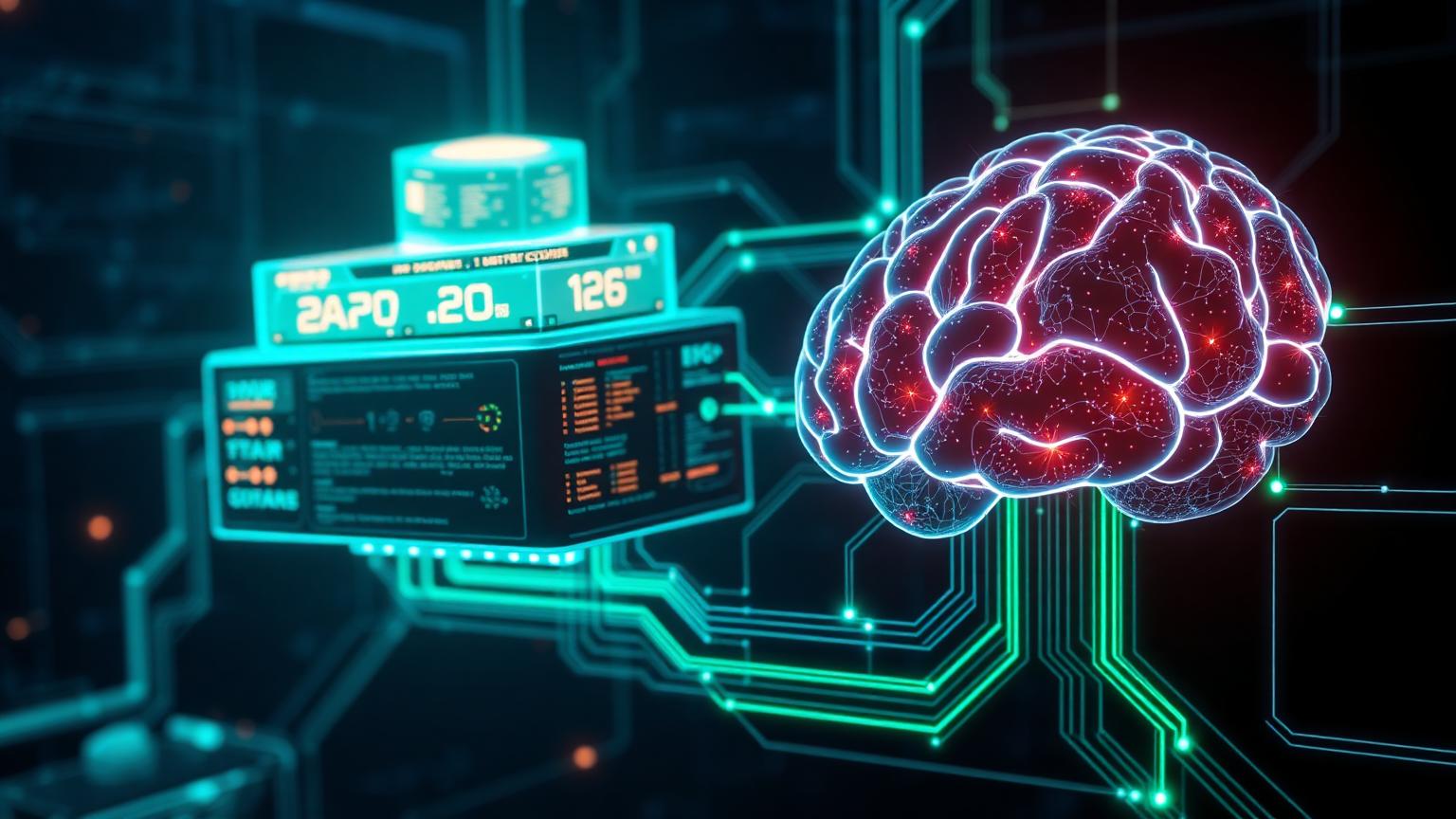
A RAG system has three parts: an indexing pipeline that converts your documents into searchable vector embeddings, a retrieval layer that finds the most relevant chunks for a given query, and a generation layer that hands those chunks to an LLM along with the user's question. Done well, the result reads like a knowledgeable colleague who has actually read your internal documentation.
Where Naive RAG Falls Apart
The first version most teams build works impressively well on the demo and disappointingly poorly in production. The common failure modes are well-understood: chunk boundaries that split related ideas, embeddings that miss semantic nuance, retrievers that return technically-similar-but-actually-irrelevant passages, and prompts that fail to give the model enough context to reason about the source material.
What Production-Grade RAG Looks Like
Mature RAG systems address these failures with a combination of techniques: hybrid retrieval that combines vector search with traditional keyword search, query rewriting that expands user questions into multiple targeted retrievals, reranking models that re-score candidate passages before they reach the LLM, and evaluation pipelines that measure end-to-end answer quality on a representative dataset.
The Agentic Shift
The frontier of enterprise RAG in 2026 is agentic retrieval — systems that plan multi-step searches, follow links between documents, and iteratively refine their understanding before answering. Combined with longer context windows and better reasoning models, this is starting to deliver on the original promise of grounded, accurate, source-cited enterprise AI.
RAG is no longer a clever trick. It is the default architecture for putting LLMs to work on your own data — and the gap between teams that do it well and teams that do not is widening fast.