
Claude by Anthropic: The Mythos, the Model, and the Mission
Category
AI & Machine Learning
Explore more in this category
A detailed look at Claude — Anthropic's family of AI assistants — its origin story, the Constitutional AI philosophy behind it, the model lineup, and why it has become a serious contender in the enterprise AI landscape.
Claude is the family of large language models built by Anthropic, an AI safety company founded in 2021 by former senior members of OpenAI, including siblings Dario and Daniela Amodei. Named after Claude Shannon, the father of information theory, Claude has grown from a research-driven assistant into one of the most widely deployed AI systems in the enterprise — powering coding agents at GitHub competitors, customer support at Fortune 500s, and the daily workflows of millions of knowledge workers. This article explores the mythos, the methodology, and the maturing product line behind the name.
The Origin Story
Anthropic was founded on a contrarian thesis: as AI systems become more capable, safety research must scale with them — not lag behind. The founders left OpenAI in part over disagreements about the pace and direction of safety work, and raised an unprecedented amount of capital (now tens of billions of dollars from Google, Amazon, and others) to pursue a research agenda where alignment, interpretability, and responsible deployment are first-class concerns rather than afterthoughts. Claude is the public-facing embodiment of that bet.
Constitutional AI: The Core Innovation
Most large language models are aligned through Reinforcement Learning from Human Feedback (RLHF), where human raters score model outputs. Anthropic pioneered a complementary approach called Constitutional AI (CAI). Instead of relying purely on human labels, the model is trained to critique and revise its own outputs against a written "constitution" — a set of explicit principles drawn from sources like the UN Declaration of Human Rights, terms-of-service patterns, and Anthropic's own safety research. The result is a model that is more transparent about why it refuses certain requests, more consistent across edge cases, and less dependent on the exhausting, subjective labor of human red-teaming.
The Model Lineup
Claude has evolved through several generations, each named with a deliberate tiering metaphor — Haiku for fast and lightweight, Sonnet for the balanced workhorse, and Opus for the frontier flagship. The Claude 3 family (released March 2024) brought multimodal vision and a 200K-token context window. Claude 3.5 Sonnet (mid-2024) became famous for surpassing larger competitors on coding benchmarks while costing a fraction of Opus. Claude 4, released in 2025, pushed agentic capabilities further with extended "thinking" modes, native tool use, and the Claude Code CLI — a terminal-native coding agent that has become a daily driver for many engineering teams.
What Makes Claude Distinctive
Three traits show up repeatedly in user feedback. First, writing quality: Claude is widely considered the strongest model for long-form prose, editing, and tone matching, partly thanks to a training corpus and reward model tuned for nuance. Second, instruction following on long, complex prompts — the model is unusually willing to read a 50-page brief and act on subtle constraints buried on page 37. Third, a recognizable "personality": Claude tends to be measured, intellectually curious, and willing to push back politely when asked to do something it considers a mistake. This conversational character — sometimes called Claude's mythos by power users — is itself a product of the constitutional training rather than an accident.
Claude in the Enterprise
Beyond the consumer chat product at claude.ai, Anthropic has built a serious enterprise stack: the Claude API, deep integrations on AWS Bedrock and Google Vertex AI, and the Model Context Protocol (MCP) — an open standard for connecting LLMs to tools, data sources, and other agents. MCP has been adopted across the industry and is rapidly becoming the USB-C of agentic AI. For regulated industries, Claude's combination of strong reasoning, transparent refusal behavior, and SOC 2 / HIPAA-ready deployment options has made it a frequent choice when GPT-class capability is needed but governance matters.
The Safety Mission
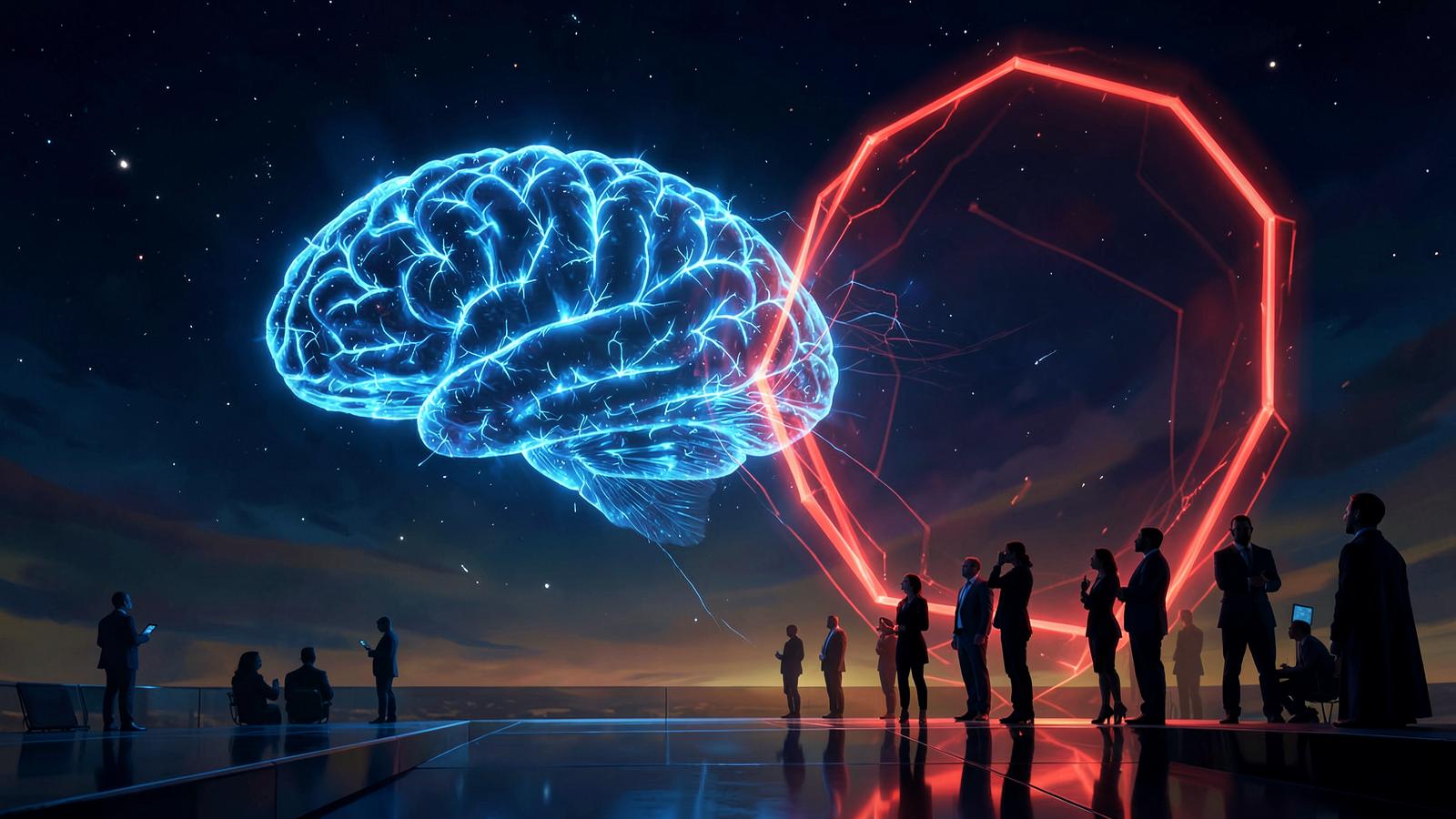
Anthropic continues to invest heavily in interpretability research — literally reverse-engineering what individual neurons inside Claude are doing — and in its Responsible Scaling Policy, which commits the company to pausing deployment of more powerful models if specific capability thresholds are crossed without matching safety guarantees. Whether one finds this reassuring or insufficient depends on one's priors about AI risk, but it is a substantively different posture than that of most frontier labs.
Why It Matters
Claude's significance is not just technical. It represents a working proof that a frontier AI lab can compete commercially while making safety, transparency, and a coherent ethical framework central to the product — not bolted on. For builders, this means a model that is genuinely useful for serious work, with a vendor whose incentives are at least partially aligned with thoughtful deployment. The mythos around Claude — the careful tone, the willingness to disagree, the constitution underneath — is, in the end, just the user-visible surface of that bet.