Trump's New Stance on Anthropic: America-First AI and the Push to Restrict Claude Abroad

Category
AI & Machine Learning
Explore more in this category
President Trump has signaled a sharp turn on US-built AI services like Anthropic's Claude, floating tighter export controls, country-by-country access limits, and a sovereignty-first doctrine for American AI. Here's what was said, what it would actually mean, and how the rest of the world is reacting.
In a series of high-profile statements over the past two weeks, President Donald Trump has positioned American-built AI — and Anthropic's Claude in particular — at the center of a new "AI sovereignty" doctrine. Speaking at a Mar-a-Lago tech summit, on cable news, and in a follow-up Truth Social post, the President argued that frontier AI services developed in the United States should be treated as strategic national assets, with their export, access, and capabilities subject to the same kind of restrictions that already apply to advanced semiconductors.
The proposal, still informal but rapidly moving toward a draft executive order according to multiple administration officials, would mark one of the most significant shifts in US AI policy since the export controls on Nvidia H100 and Blackwell chips. And it puts companies like Anthropic — whose business model depends heavily on global enterprise and developer access to the Claude API — squarely in the crosshairs.
What Trump Actually Said
The headline quote, delivered to reporters and quickly amplified by allies, was blunt: *"We built it, we paid for it, we're not going to just give it away to countries that don't like us."* The President went further, naming Anthropic specifically alongside OpenAI and Google as companies whose most capable models, in his view, should not be freely available to "adversaries, near-adversaries, or people who haven't earned it."
A few specific proposals have surfaced in the days since:
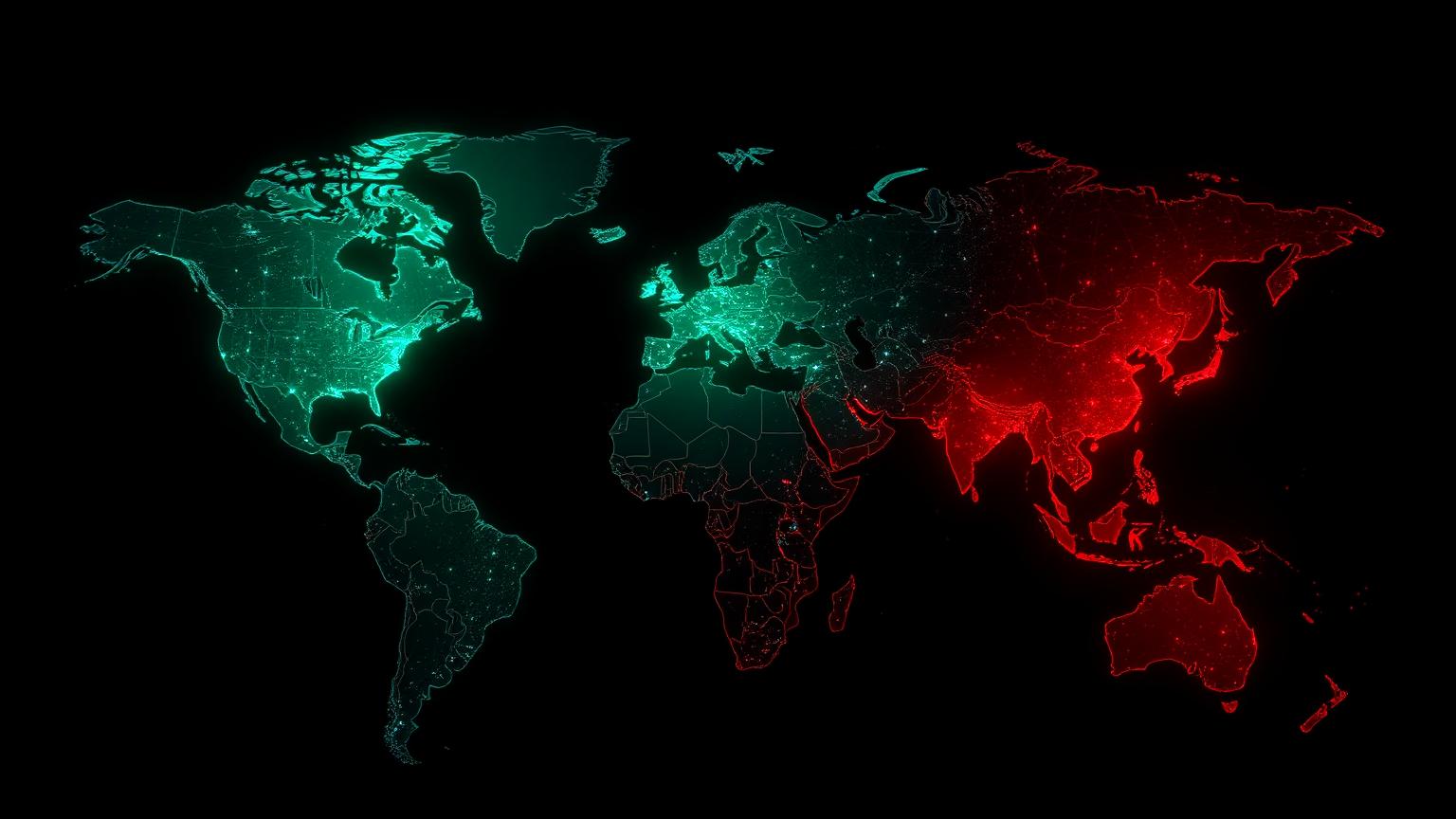
- A tiered country list modeled on the existing chip export framework, with Tier 1 allies (UK, Japan, South Korea, Australia, most of the EU) retaining near-full access, Tier 2 nations facing capability caps and additional licensing, and a Tier 3 effectively cut off from frontier-class models.
- API-level capability throttling for non-US users — meaning a Claude Opus call from a restricted country might silently return Haiku-tier output, or refuse certain agentic capabilities entirely.
- Compute residency requirements that would push Anthropic and peers to serve foreign customers only from US or allied data centers, ending the current pattern of regional EU and APAC inference hubs.
- A vague but politically charged "America-first licensing" clause that would give US-headquartered enterprises preferential rate limits and feature access.
Why Anthropic Is in the Spotlight
Anthropic is an interesting test case for this doctrine, and not by accident. The company is American, Bay Area-based, and has accepted billions in investment from US strategic partners including Amazon and Google. It has also been unusually public about its national-security posture, signing on to US government safety commitments, briefing senior officials on frontier capabilities, and operating one of the most aggressive responsible-scaling policies in the industry.
That posture has won Anthropic friends in Washington. It has also, in this new climate, made the company an obvious target for being told to act like the national champion the administration now appears to want.
Anthropic itself has not issued a formal response at the time of writing. CEO Dario Amodei, asked about the proposal at a separate event, gave a careful answer noting that the company already complies with all existing US export law and would "engage constructively with any new framework," while emphasizing that "broad access to safe, capable AI is itself a strategic advantage for the United States." That last clause is the heart of the industry's pushback.
The Industry's Quiet Pushback
Behind the scenes, frontier labs are alarmed — and not subtly. The case against aggressive export restrictions on AI services rests on several uncomfortable realities:
- AI is not a chip. Restricting Nvidia hardware is enforceable because the chips are physical objects with serial numbers. Restricting an API call is enforceable only with cooperation from cloud providers, payment networks, and the model vendor itself — and even then, a determined customer can route through a VPN, a proxy, or an offshore reseller.
- China is not standing still. DeepSeek, Qwen, Kimi, and a growing pipeline of capable open-weight Chinese models mean that cutting off Claude does not cut off frontier capability — it just hands the global non-US market to a competitor that Washington has even less leverage over.
- The EU will not accept being throttled. European officials have already signaled, off the record, that any tiered system that places EU member states below the United States on a capability ladder would be treated as a trade dispute and answered with reciprocal measures, potentially including preference for European-trained models in public procurement.
- The revenue math is brutal. A large share of Anthropic's enterprise revenue comes from outside the United States. Capability throttling abroad is, in effect, a tax on the US AI industry's most lucrative growth segment, paid to no one.
What This Would Actually Mean For Users
If something close to the proposed framework becomes policy — and that is still an *if*, not a *when* — the practical impact would fall into a few clear buckets.
For US enterprises: largely unchanged, possibly improved. Preferential rate limits and earliest access to new model tiers would be a real competitive edge for American companies competing against foreign rivals on AI-augmented productivity.
For allied countries (UK, EU, Japan, etc.): mild friction at first, escalating quickly. Expect additional KYC requirements, slower rollout of new model versions, and a noticeable politicization of what is currently a fairly frictionless developer experience. Long term, expect a hard push from local governments to fund "sovereign" alternatives — Mistral in Europe, Sakana in Japan, a growing list elsewhere.
For developing markets and non-aligned countries: significant impact. Many small companies in Latin America, Africa, Southeast Asia, and the Middle East have built their products on Claude, GPT, and Gemini APIs precisely because they could not afford to train their own models. A Tier 3 designation would force a hard migration to whichever frontier-capable alternative is still available — most likely Chinese open-weight models, which is precisely the outcome the policy claims to prevent.
For Anthropic and peers: revenue hit, brand damage abroad, and a structurally harder competitive position against any non-US lab that is not subject to the same restrictions. The companies will comply — they have no real choice — but the long-term cost of being seen as instruments of US foreign policy is one the entire industry has spent years trying to avoid.
The Sovereignty Argument, Steel-Manned
It is worth taking the administration's case seriously rather than dismissing it. Frontier AI is, plausibly, a strategic capability on the order of nuclear technology or advanced semiconductors. The same capabilities that make Claude useful for legitimate enterprise work also make it useful for cyber operations, disinformation at scale, and accelerated weapons research. The argument that the United States should not subsidize, via cheap API access, the AI capabilities of governments hostile to American interests is not absurd. Many security analysts across the political spectrum agree with some version of it.
The disagreement is over implementation. A narrow, well-targeted control regime focused on specific capabilities (CBRN-uplift, advanced cyber, autonomous agents acting on critical infrastructure) and specific bad actors is defensible and arguably overdue. A broad, country-tier regime that throttles ordinary developer access to general-purpose models is a different beast — one that historically has not worked for software, has not stopped China from building competitive AI, and risks accelerating the fragmentation of the global tech stack into US, Chinese, and possibly European spheres that interoperate poorly with each other.
Why It Matters
Whatever the final form of the policy, the deeper signal is clear: frontier AI has joined the short list of technologies that are no longer simply commercial products. They are instruments of statecraft, and they will increasingly be treated as such. Anthropic, OpenAI, Google DeepMind, and the rest will have to operate in an environment where their international product roadmaps are subject to political review, where their global customer base is segmented by passport, and where being seen as "the American AI company" is both a marketing advantage at home and a structural liability abroad.
For the rest of the world, the message is also clear, and it is one that European, Indian, Emirati, and other AI-policy circles have been arguing for several years: dependence on a foreign AI stack — any foreign AI stack — is now a sovereignty risk. Expect a wave of national AI funds, sovereign model initiatives, and "buy local" public procurement rules in the coming twelve months, justified explicitly by reference to this debate.
And for everyday users of Claude outside the United States? The honest answer is that nothing has changed today. But the rules under which you access the most capable AI in the world are about to be rewritten, in Washington, without you in the room.
Watch this space carefully. The next executive order will tell us a great deal about what kind of AI century this is going to be.